
Personalized estate planning designed to protect the people you love
ESTATE PLANNING IN PORT TOWNSEND
Estate planning is about more than creating documents. It’s about making thoughtful decisions now so your family has clarity, protection, and support later.
At Sitka Legal, we help individuals and families throughout Washington create estate plans tailored to their goals, relationships, and future needs with clear guidance at every step.
Photo by Al McCleesePLANNING FOR THE FUTURE CAN FEEL OVERWHELMINGIf these thoughts have been sitting in the back of your mind, you’re not alone.

“I know I need to do this, but I don't know where to start.”
01
“I want to protect my kids.”
02
“I moved states or had a significant life change.”
03
“I want things to be easier for my family.”
04
Estate planning involves deeply personal decisions, and it’s normal to want thoughtful guidance through the process. Our role is to bring clarity, explain your options clearly, and help you move forward with confidence and peace of mind.
how we approach planningGuidance rooted in clarity, education, and peace of mind
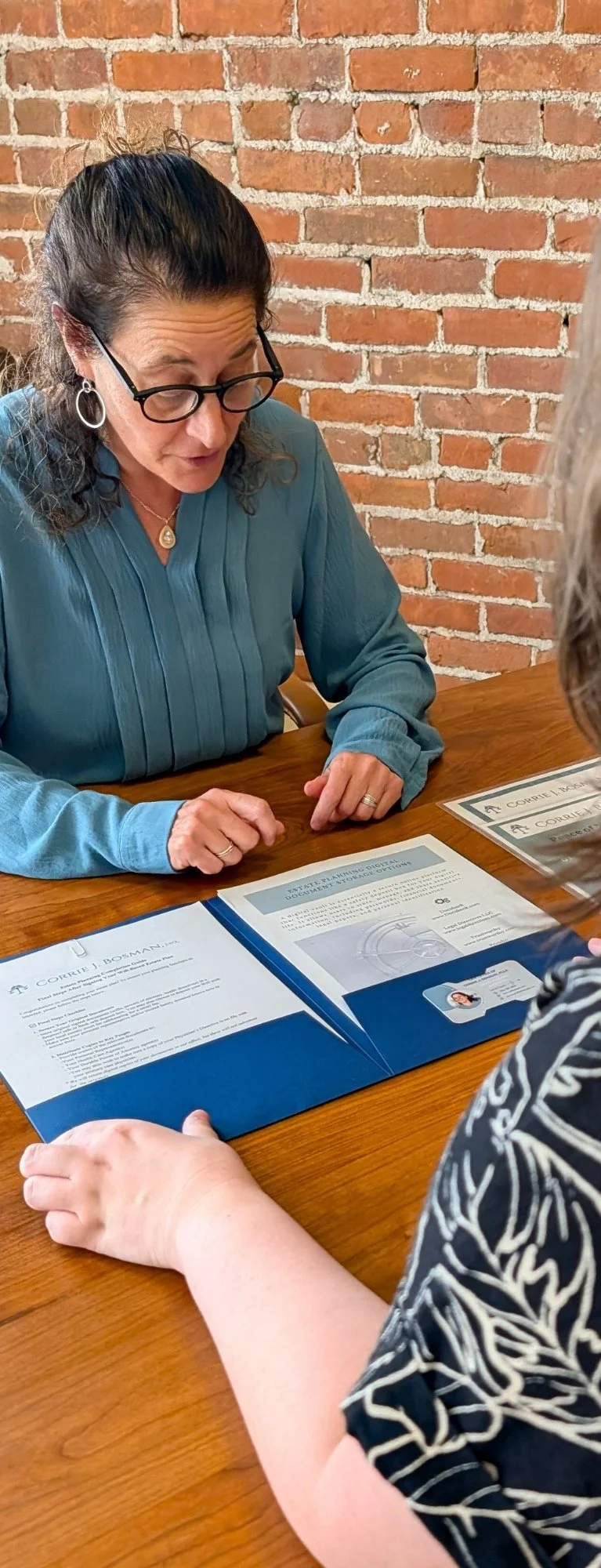
Corrie takes time to understand your situation, explain your options in plain language, and help you make informed decisions with confidence. She believes true peace of mind comes from understanding your plan, not simply signing documents.
-
![A stylized icon of a winding mountain trail with two pine trees, enclosed by a decorative scalloped border.]()
Personalized planning
Your estate plan should reflect your family, priorities, and long-term goals — not generic templates.
-
![Line drawing of a lightbulb inside a scalloped border on a light blue background.]()
Clear explanations
We simplify complex legal concepts so you can move forward with greater confidence and clarity.
-
![Simple line drawing of a hand holding a test tube or a small bottle with liquid, enclosed in a decorative, scalloped border.]()
Comprehensive support
We help clients think through the practical realities their loved ones may face, not just the legal paperwork itself.
-
![A stylized icon of a compass with a wavy circular border on a light blue background.]()
Long-term perspective
Estate planning is not a one-time transaction. Your plan should be able to evolve as life changes.




what estate planning can includeComprehensive estate planning services
Estate planning looks different for every family or business. We help clients create plans that reflect their priorities, relationships, and long-term goals.
-

Wills
Create clear instructions for how assets should be distributed and who should care for minor children.
-

Revocable Living Trusts
Help simplify administration, maintain privacy, and create smoother transitions for loved ones.
-

Powers of Attorney
Appoint trusted individuals to handle financial and legal matters if you become unable to do so.
-

Healthcare Directives
Document your medical wishes and designate someone to make healthcare decisions on your behalf.
-

Guardianship planning
Create thoughtful plans for the care and protection of minor children.
-

Planning for blended families
Address more complex family dynamics with planning tailored to your unique circumstances.
-

Charitable giving planning
Incorporate charitable goals into your long-term planning strategy.
-

Washington estate tax planning
Explore strategies that may help preserve more for future generations.
-

Business owner planning
Protect both your family's future and the business you've worked hard to build.
-

Planning for loved ones with special needs
Create a plan that provides long-term support while preserving important benefits and resources.

who we work best withPlanning for individuals and families looking for comprehensive guidance
Sitka Legal is best suited for clients who value personalized support, proactive planning, and long-term peace of mind.
Many of our clients are:
Young families planning for children and guardianship
Retirees updating older estate plans
Business owners
Individuals who have had significant life changes (divorce, death of a spouse, children have grown up)
Families caring for loved ones with disabilities
Individuals updating out-of-state documents after moving to Washington
People looking for trusted legal guidance through important life decisions
Our focus is comprehensive planning designed to support your loved ones well into the future.
Common questions about estate planning
Most people don’t start thinking about estate planning because something is wrong. It usually comes up in everyday life—buying a home, having kids, building savings, or simply realizing that things are more complicated than they used to be.
And when people do start looking into it, the same questions tend to come up almost immediately:
Do I really need to do this now? Can’t it wait until I’m older?
What happens if I don’t do anything at all?
I already have a plan from another state—do I need to update it?
What actually happens if I become incapacitated?
Those are good questions. Here are simple answers to help you get oriented.
-
In most cases, yes.
At its core, an estate plan answers two questions:
Who receives your assets when you pass away
Who can step in if you can’t make decisions for yourself
That second part—incapacity planning—is often what people don’t think about until they realize how important it is. Without documents in place, families are often left needing court involvement just to help manage day-to-day decisions.
-
It’s a common thought, and an understandable one.
The challenge is that estate planning isn’t only about age. It’s also about being prepared if something unexpected happens, whether that’s illness, an accident, or a period of incapacity where you can’t make decisions for yourself.
Waiting doesn’t avoid the need for a plan—it just means the decisions would be made without one if something happens in the meantime.
-
Washington has default rules that apply if there’s no plan in place.
That means the state decides who inherits your assets and who is legally responsible for handling everything. It may not reflect your family situation or your wishes.
If you also become unable to make decisions during your lifetime, your family may need to go to court just to get authority to help with medical or financial matters.
-
A will says who receives your assets and who is in charge of handling your affairs after you pass away. In Washington, it usually goes through probate.
A trust can hold assets and often allows things to be handled outside of probate. It can also help with continuity if you become unable to manage your affairs.
Many people use one or both, depending on what makes sense for their situation.
-
Often, yes.
Many estate plans still work in Washington, but they may not be fully aligned with Washington law or your current life. Things like real estate, state-specific probate rules, Washington estate tax considerations, and your end-of-life wishes can make an older plan incomplete or outdated.
Even when a plan is still valid, it’s worth reviewing to make sure it still reflects your life today, not where you used to live or what your situation used to be.
-
Many clients come to us with existing plans that need updating. We can review your current documents, discuss whether they still reflect your wishes, and recommend any necessary changes.
-
Every plan is different, but estate plans commonly include wills, trusts, powers of attorney, healthcare directives, and other documents designed to carry out your wishes and protect your family.
-
This is one of the most important parts of planning for many families.
If you have minor children, you can name a guardian in your estate plan—someone you trust to care for and raise them if something happens to you. If you don’t name someone, a court will decide.
You can also include instructions for your pets, including who should care for them. It’s a simple step, but it helps avoid confusion later.
-
This is a very common question—and an important one.
Estate planning is still important even if you don’t have heirs.
Without a plan, Washington will look for legal next of kin. If none are found, or if there is no one appropriate or available, your estate could eventually be handled by the state process known as escheat.
More importantly, you also get to choose:
who manages your affairs if you become incapacitated
who handles your estate when you pass away
and what happens to your assets, property, or charitable intentions
Many people in this situation choose trusted friends, professional fiduciaries, or charitable organizations to carry out their wishes.
-
Washington has an estate tax that may apply to larger estates. Not everyone is affected.
There is no inheritance tax in Washington, which means beneficiaries do not pay tax just for receiving assets. If estate tax applies, it is handled by the estate during administration. Proper planning can help mitigate Washington estate taxes.
-
There’s no strict rule for how often you need to update your estate plan. The real answer is simple: review it when life changes.
When to take a closer look
You should revisit your plan if you experience any of the following:
Marriage, divorce, or a long-term relationship change
Birth or adoption of children or grandchildren
A death or change in someone named in your plan
Buying or selling real estate
A significant change in finances or business ownership
Moving to or from Washington
Major changes in state or federal law
Even if nothing major changes, many people find it helpful to review their plan every 3–5 years as over time; documents can fall out of step with your life or current laws.
Where to start
Most people don’t start with documents—they start with questions.
During your Peace of Mind Planning Session, we’ll talk through your situation, answer your questions in plain language, and help you understand what actually applies to you.
The goal is simple: to make sure your wishes are clear, your family isn’t left guessing, and nothing important is left to chance.
-
While we don't serve as a Personal Representative (Executor) or Trustee for our clients, we're happy to help you choose the right person for those roles. During your planning, we'll talk through what to look for and help you think about who may be the best fit. If you don't have a family member or friend who can serve, we can often connect you with experienced professional fiduciaries.
-
Yes. Whether we prepared your estate plan or you already have a trust and simply need help transferring your Washington or Alaska property into it, we're happy to assist.
-
Because every plan is customized, fees vary depending on the complexity of your situation and the services included. You'll receive clear, flat-fee pricing during your Peace of Mind Planning Session before making any commitment.

Create a plan your family can rely on
Estate planning doesn’t have to feel intimidating or confusing. With thoughtful guidance and a personalized approach, you can move forward knowing your loved ones, assets, and wishes are protected.